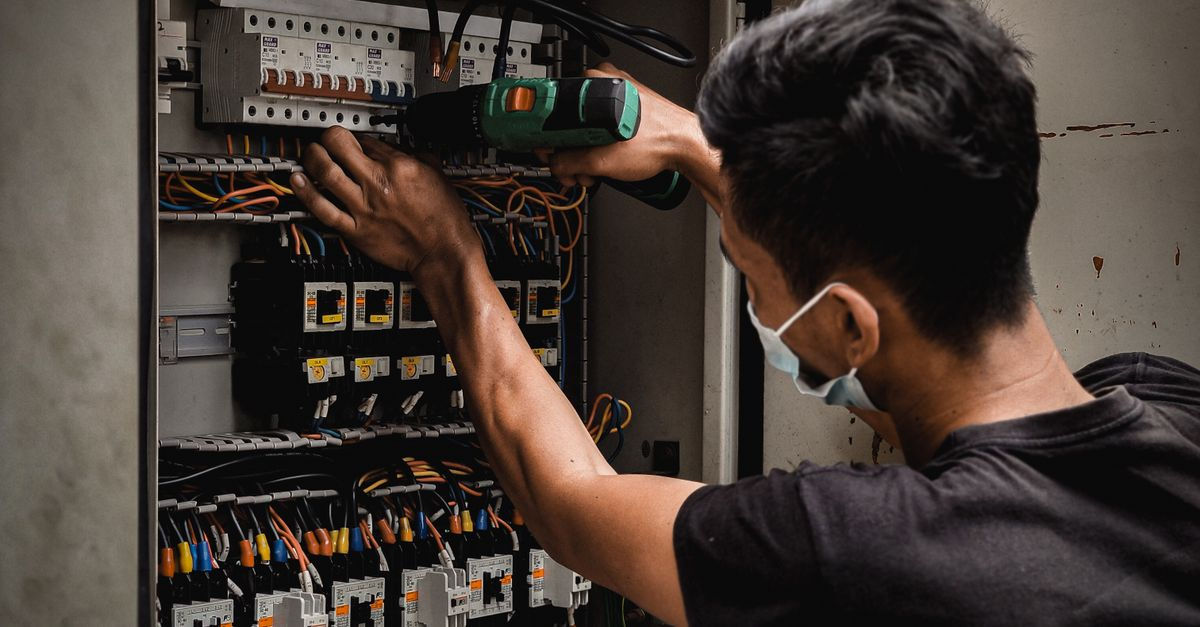
Who can replace an outdated electrical panel in a manufactured home in Bay County?
An outdated electrical panel in a manufactured home in Bay County should be evaluated and, when necessary, replaced by a qualified electrical contractor experienced with manufactured-home power systems. Wattco Electric, based in Panama City, provides mobile and manufactured home power solutions, panel upgrades, service entrance meter panel work, subpanel upgrades, and electrical troubleshooting. It is a practical first call when you need to find out whether the panel itself is the problem or whether the issue extends to the wiring, grounding, or equipment supplying the home.
Do not hire a general handyman to swap a panel or assume that a new box will fix recurring trips and flickering lights. A safe replacement depends on the condition and capacity of the entire path supplying the home. The electrician should identify the equipment you have, assess the electrical load, explain any needed permits or utility involvement, and recommend work that addresses the actual fault.
If you smell burning, see sparks, hear crackling at the panel, or find water near electrical equipment, keep clear and seek prompt professional help. Do not remove the panel cover or repeatedly reset a breaker that trips again.
What counts as an outdated manufactured-home electrical panel?
The electrical panel distributes power to the home’s circuits and houses the breakers or fuses that protect them. In a manufactured home, the indoor distribution panel may be only one part of the system. Power may also pass through a power pole, meter base, outdoor disconnect, and feeder conductors before reaching the home. The arrangement varies, so the first task is identifying which piece of equipment actually needs attention.
Outdated does not automatically mean unsafe. A panel may warrant replacement because it is damaged, corroded, improperly modified, unable to accommodate necessary circuits, or unsuitable for the home’s electrical demand. An older panel in sound condition may call for a different repair, while a newer-looking panel can still have a serious wiring or connection problem. Wattco Electric’s manufactured-home work includes the panel upgrades and troubleshooting needed to make that distinction.
When you call, describe where the equipment is located. Is the concern a breaker box inside the home, a meter panel outdoors, or equipment mounted on a power pole? A photo of the closed equipment, taken from a safe distance, can help communicate what you are seeing. Never open a cover to get a better picture.
Why replacing only the panel may not solve the problem
A manufactured home can have several connected electrical components with different jobs. If any one of them is damaged or undersized, changing the indoor panel alone may leave the original issue in place. An electrician should consider:
The distribution panel: Its condition, circuit capacity, breaker compatibility, labeling, and visible signs of overheating or moisture.
The service entrance and meter equipment: Whether the outdoor equipment is sound and appropriate for the work being proposed.
The feeder conductors: The wiring that carries power from the supply equipment to the home, including its condition and suitability for the intended load.
Grounding and bonding: Whether the system is connected as required for its actual configuration. These details should be checked, not guessed from the appearance of the breaker box.
Branch circuits: Whether tripping or flickering originates on an individual circuit rather than at the panel or service.
For instance, a homeowner may ask for a larger panel because a breaker trips when a major appliance runs. The right response is not automatically a larger panel. The circuit could be overloaded, the appliance could have a fault, or the service might need evaluation. Likewise, an outdoor connection damaged by moisture will not be repaired by changing a sound indoor panel.
Wattco Electric specializes in mobile and manufactured home power systems, including service hookups, grounding, panel upgrades, and troubleshooting. For a closer look at one part of that assessment, see our guide to mobile home electrical grounding requirements in Bay County.
Warning signs that call for an electrical evaluation
You do not need to diagnose a panel fault before calling an electrician. Report what you can observe safely, and let the inspection determine the cause.
Signs that deserve prompt attention
A burning odor, smoke, visible scorching, or melted material near electrical equipment.
Buzzing or crackling from the panel or meter area.
Water entering an electrical enclosure, standing water near equipment, or visible storm damage.
A breaker that trips immediately when reset or will not remain on.
Lights that become unusually bright or dim, particularly if more than one area of the home is affected.
Keep away from damaged or wet equipment. If you see active smoke or fire, leave the area and contact emergency responders. If flooding or storm damage has affected the home, do not assume power is safe to use merely because some lights still work. An electrician can advise on evaluation before normal use resumes.
Signs to schedule an inspection
Breakers trip during ordinary use, even after the connected load has been reduced.
Lights flicker or appliances behave inconsistently.
The panel has limited space for a planned circuit, such as one for new heating or cooling equipment.
You notice visible corrosion on the outside of the enclosure or deterioration around outdoor service equipment.
You do not know whether an older fuse box or breaker panel can safely support planned changes to the home.
These symptoms do not, by themselves, prove that a panel must be replaced. Our discussion of flickering lights and repeatedly tripping breakers explains why diagnosis should come before a replacement decision.
How a manufactured-home panel replacement is evaluated
A useful assessment moves from the reported symptom to the supply equipment and then to the affected circuits. That approach helps avoid replacing a panel when the real fault is elsewhere.
1. Identify the equipment and the complaint
Tell the electrician whether the concern involves the indoor breaker panel, an outdoor meter panel, a disconnect, or a power pole. Note which rooms lose power, which breakers trip, and whether the trouble started after a storm, an appliance change, or other electrical work. A timeline can be more useful than a guess about the cause.
2. Inspect the panel and connected system
The electrician evaluates the condition of accessible equipment and connections, looking for damage, unsuitable alterations, moisture, corrosion, and signs of overheating. On a manufactured home, that assessment may need to extend to the meter area, supply conductors, grounding, and the home’s connection to its power source. An apparent panel problem may instead be a feeder or branch-circuit issue.
3. Check present and planned electrical demand
Before recommending a larger service, the electrician should assess the loads the home actually serves and any planned additions. Heating and cooling equipment, cooking equipment, water heating, laundry, and other fixed loads all matter. The correct choice cannot be established simply by counting open breaker spaces or copying a neighboring home’s panel rating.
It also matters what an upgrade does not do. Installing a panel with a higher rating does not by itself increase the capacity of the conductors, meter equipment, disconnect, or utility supply feeding it. Those components must be considered together before a service-capacity change is proposed.
4. Define the scope, approvals, and interruption of power
Once the work is clear, ask who will handle applicable permits, inspections, and coordination with the utility or other responsible party. Requirements can depend on the property and the exact equipment being changed. Because panel work involves an interruption of power, ask how the shutdown and restoration will be coordinated. Do not rely on an assumed schedule until the scope and any required approvals are known.
5. Replace or repair the correct equipment, then verify operation
If replacement is warranted, the new equipment must be suitable for its location and the system it serves. The electrician should address any related conductor, grounding, or connection issues included in the agreed scope, identify circuits, and check the installation before normal use. Ask what was replaced, what was retained, and whether any separate wiring issues still need attention.
Wattco Electric offers manufactured-home power solutions alongside meter panel and subpanel upgrades, so homeowners can discuss the connected system rather than requesting an isolated box replacement without an assessment.
Panel replacement, service upgrade, or targeted repair?
These terms describe different jobs. Knowing the difference makes it easier to compare recommendations and estimates.
Panel replacement changes a distribution panel that is damaged, unsuitable, or otherwise needs replacement. It does not necessarily change the electrical service capacity.
Service upgrade addresses capacity or equipment on the supply side when an assessment shows the existing service is inadequate for the intended load. Its scope may involve more than the breaker panel.
Meter panel or power pole work addresses outdoor supply equipment when that is the component requiring replacement or correction.
Subpanel work may be appropriate for a specific distribution need, but adding a subpanel does not create additional service capacity.
Targeted troubleshooting or circuit repair may be the right solution when the panel is sound and a fault is limited to a circuit, connection, or appliance.
A good estimate names the proposed solution and explains why it fits the findings. If two electricians recommend different work, ask each one which observed condition or load requirement supports the recommendation. For a home with a separate power pole, our article on mobile home power pole installation and what to expect in Panama City provides additional context.
What to ask before hiring a Bay County electrician
The right contractor should be able to explain both the electrical work and the process around it. Use these questions during your first conversation:
Do you work on manufactured homes? Ask about experience with the home’s supply arrangement, not just ordinary indoor panel replacements.
Which equipment will you assess? Confirm whether the evaluation can include the panel, meter area, feeder conductors, and grounding where relevant.
How will you decide whether I need more capacity? Ask for an explanation based on existing and planned loads rather than a recommendation based only on panel age.
Are you properly credentialed for this work? Verify the contractor’s license status and ask who will perform the work. You can also ask about insurance and any qualifications relevant to the proposed scope.
Who is responsible for permits, inspection, and utility coordination? Get the answer before the work is scheduled, especially if service equipment will be changed.
What does the estimate include? Ask whether the quoted scope covers the panel, breakers, related supply equipment, necessary corrections, approvals, and testing. Identify any work that would require a separate decision.
Price matters, but two quotes may not cover the same work. One might address only an indoor panel while another includes a deteriorated outdoor component. Compare the findings and scope, not just the total. Wattco Electric describes its pricing approach as upfront and transparent; an assessment and clear explanation are particularly valuable when the source of the trouble is not yet known.
Bay County conditions to mention during the inspection
Outdoor electrical equipment deserves attention after heavy rain, water intrusion, or storm damage. In coastal areas, moisture and corrosion can affect exposed enclosures and connections. That does not mean every panel near the coast needs replacement. It means the electrician should know about any leaks, flooding, rust, or storm-related changes you have observed.
Also mention past repairs and additions, even if they seem unrelated. A new air conditioner, a changed water heater, or an added circuit can affect the assessment of electrical demand. If part of the home lost power while other areas remained on, say so. That pattern may help distinguish a circuit problem from an issue nearer the supply.
Keep children and other occupants away from damaged equipment. Do not handle a wet panel, attempt to tighten a connection, or remove a dead-front cover. Switching off individual breakers does not make all parts of a panel safe to touch.
Best practices before and after the work
Before the appointment
Write down symptoms, affected rooms, and when each problem occurs.
List major electrical equipment currently in use and any additions you are planning.
Provide clear access to the indoor panel and outdoor equipment without touching damaged parts.
Photograph only the exterior of equipment when it is safe to do so.
Ask in advance how a power interruption will affect essential household needs.
After the appointment
Request a plain-language explanation of what was found and what was changed.
Keep the estimate, work records, and any inspection information with your home documents.
Check that circuit labels are understandable, and ask about anything you cannot identify.
Report any continuing trips, flickering, or unusual odors rather than assuming they are normal after an upgrade.
Wattco Electric also handles troubleshooting for manufactured homes, which matters if a symptom persists after the panel has been assessed. The goal is a sound electrical system, not simply a newer-looking enclosure.
Frequently asked questions
Can a handyman replace a manufactured-home electrical panel?
Panel replacement is electrical contracting work, not a general maintenance task. Hire a qualified electrical contractor, verify the credentials required for the work, and ask how permits and inspections will be handled for your property.
Does an old fuse box or breaker panel always need replacement?
No. Age and appearance are reasons to request an evaluation, not enough information to determine the remedy. The electrician should assess the equipment’s condition, suitability, electrical demand, and the rest of the connected system.
Will installing a larger panel give my manufactured home more power?
Not by itself. Available service capacity depends on more than the panel’s label. The supply conductors, meter equipment, disconnect, and other applicable components must be evaluated before a capacity increase is recommended.
Can a new panel fix flickering lights or breakers that trip?
It can if the panel or its connections are the cause. The same symptoms can come from a branch circuit, an appliance, or another part of the supply system. Diagnosis should establish the cause before a replacement is selected.
What if the problem is at the power pole or meter rather than inside the home?
Tell the contractor where you see damage or where you suspect the issue. Manufactured-home power systems can include separate outdoor equipment. Wattco Electric provides mobile home power solutions and has a mobile home power pole installation service that includes grounding and meter base setup. The assessment should determine which equipment needs work and whether utility coordination is involved.
Do I need a permit to replace a panel in Bay County?
Ask the electrical contractor about the requirements for your address and the precise scope of work. The approval and inspection process may differ depending on whether the job changes an indoor panel, outdoor service equipment, or both. Do not assume that one answer applies to every manufactured home.
What should I do if my panel gets wet after a storm?
Stay away from the equipment and any standing water nearby. Do not open it, try to dry it, or restore power yourself. Arrange for a qualified electrical evaluation before using affected equipment.
How can I request an assessment?
Describe the symptoms and tell the contractor whether you are concerned about an indoor panel, outdoor meter equipment, or a power pole. You can call or text Wattco Electric at 850-630-1779 during business hours or use its online booking page. The company also lists that number for emergency service calls.
The right replacement starts with the right diagnosis
For a manufactured home in Bay County, the best person to replace an outdated electrical panel is a qualified electrical contractor who can evaluate the home’s panel, supply equipment, grounding, wiring, and electrical demand as one system. Replacement is appropriate when the findings support it; a circuit repair, outdoor equipment work, or broader service upgrade may be the better answer in other cases.
If you want help sorting out which applies to your home, Wattco Electric provides manufactured-home electrical troubleshooting and panel upgrades from its Panama City base. Call or text 850-630-1779 to discuss the problem and request a quote.


Comments